Gregor: Where are you from and what is your artistic background?
Bibo: I come from a small village in Sachsen-Anhalt and have been in Berlin since 2012. I started with stickers and worked with stencils and spray cans.
Gregor: What brought you to the subject of club culture?
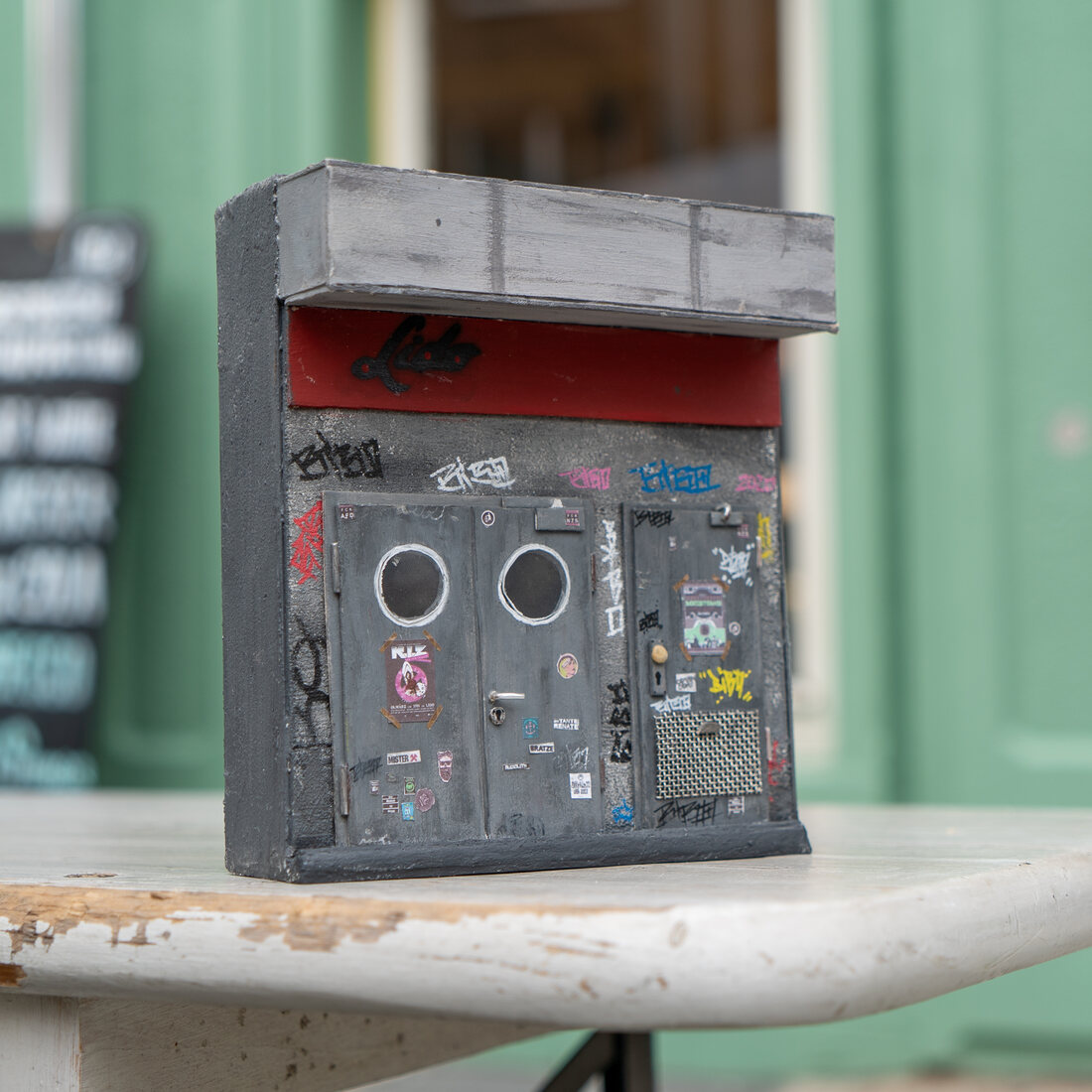
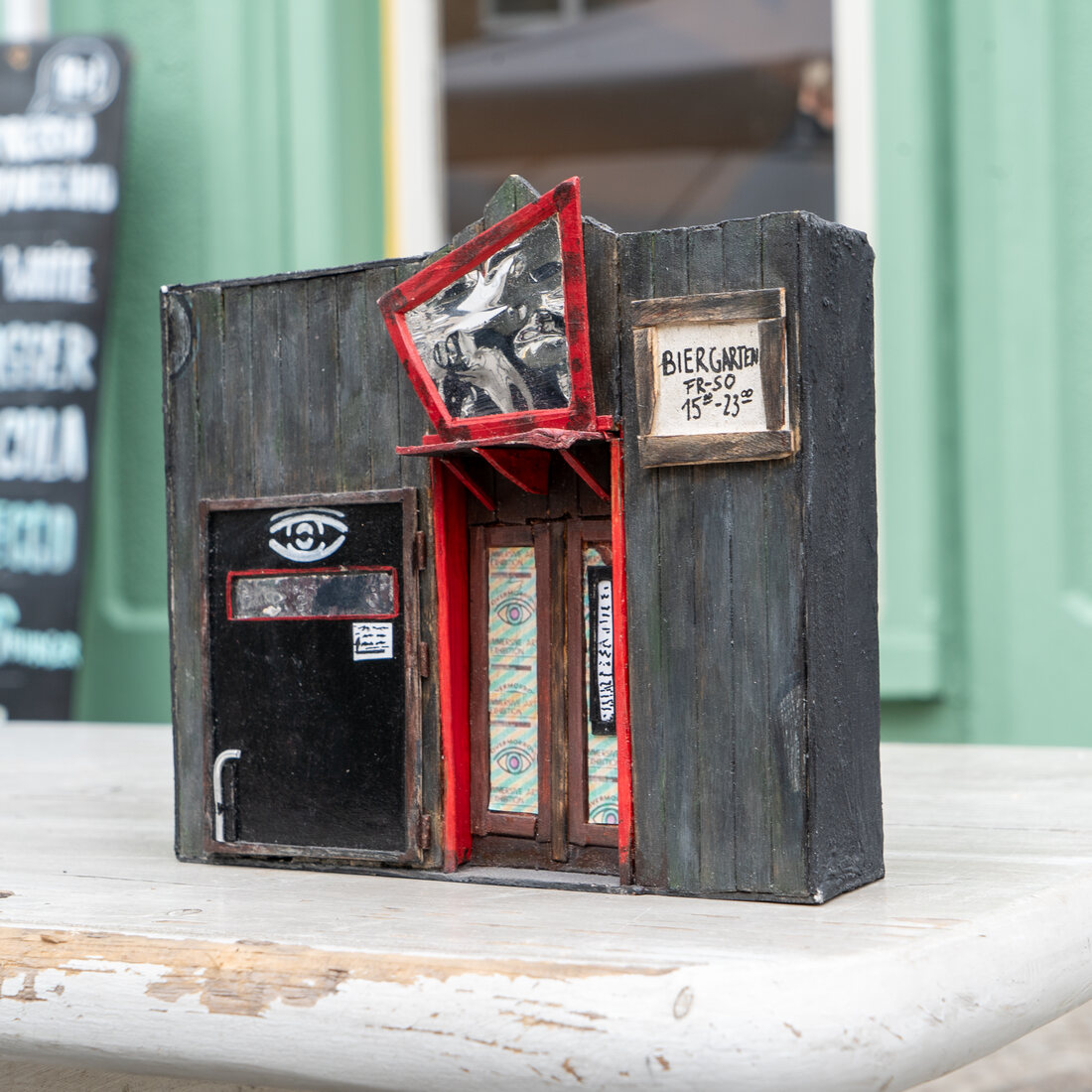
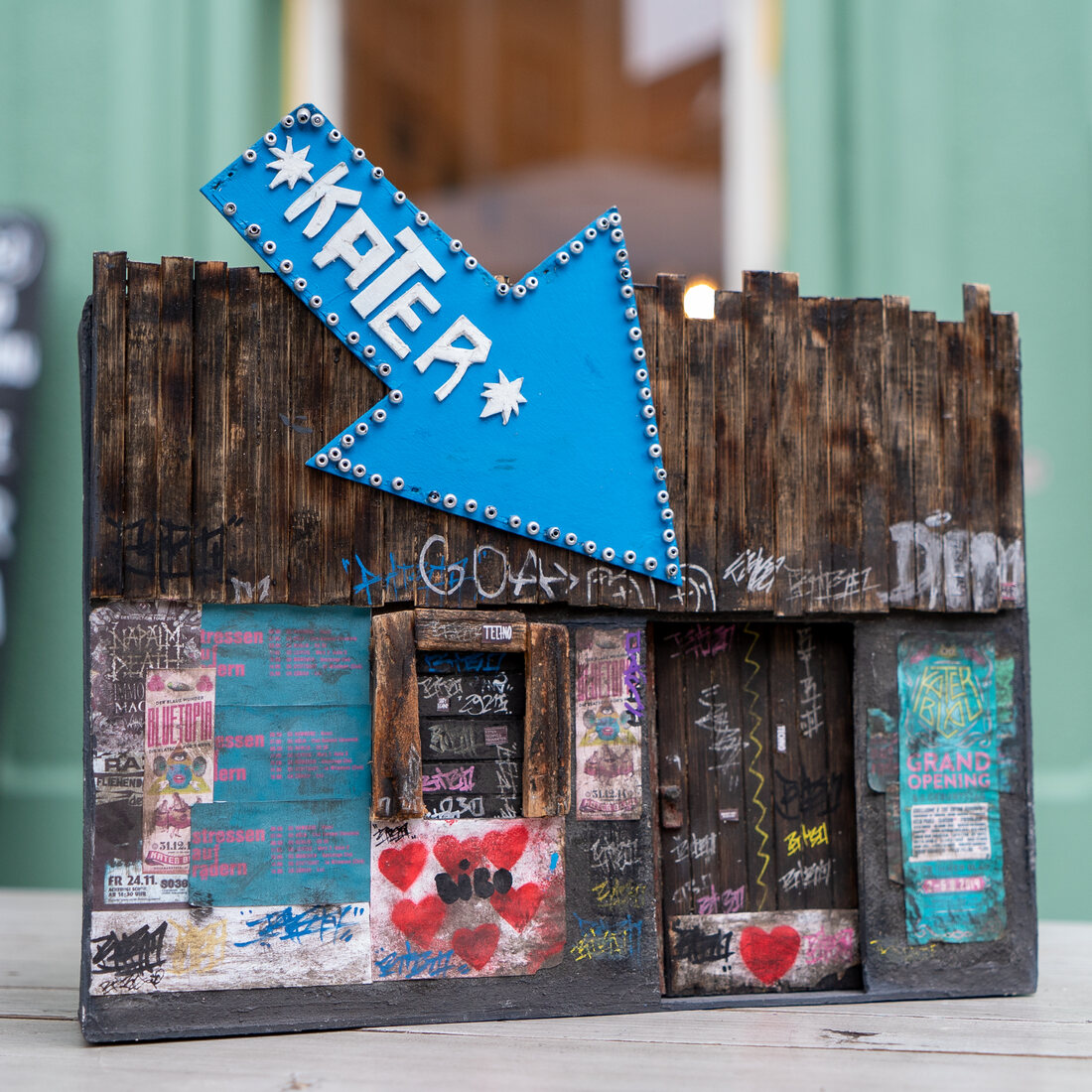
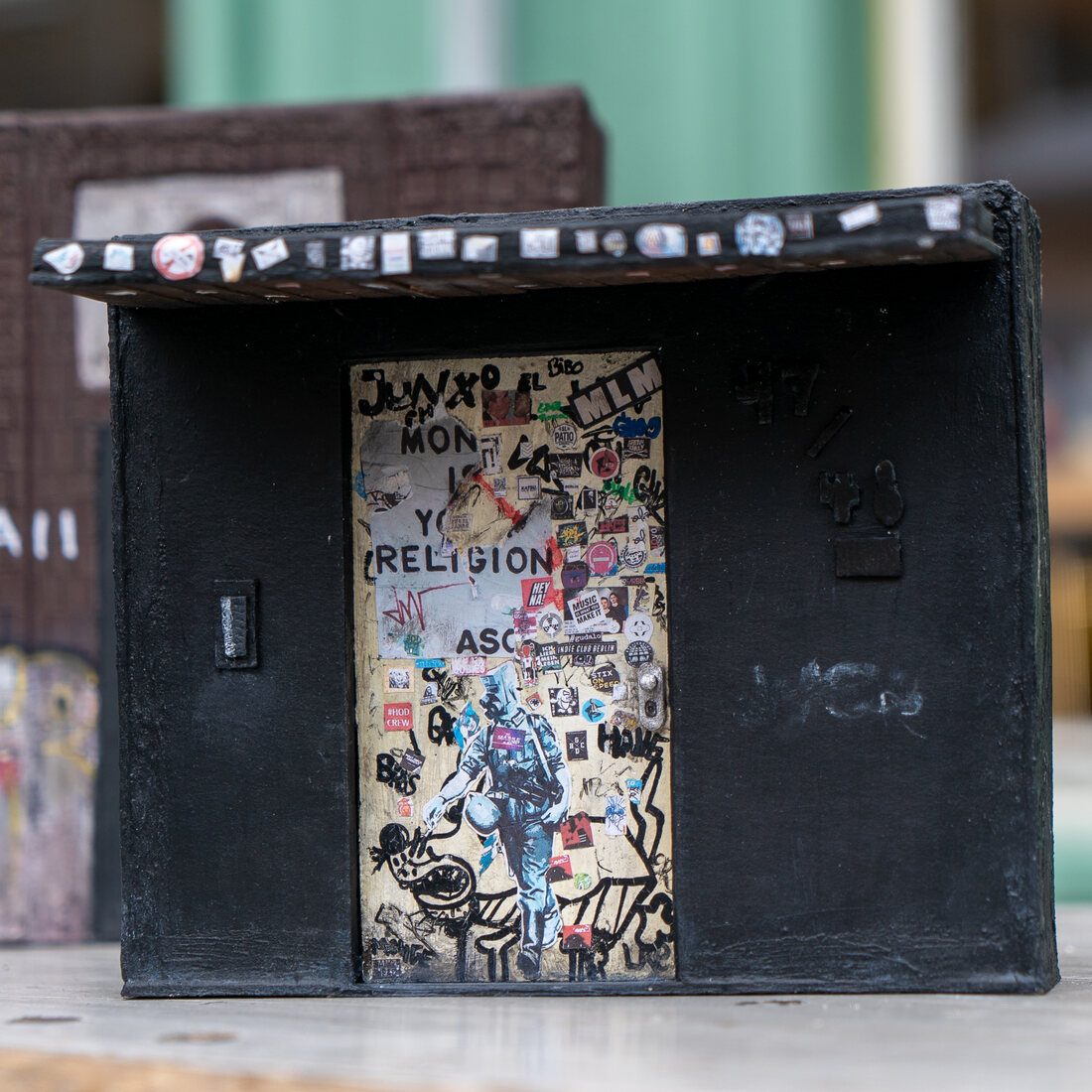
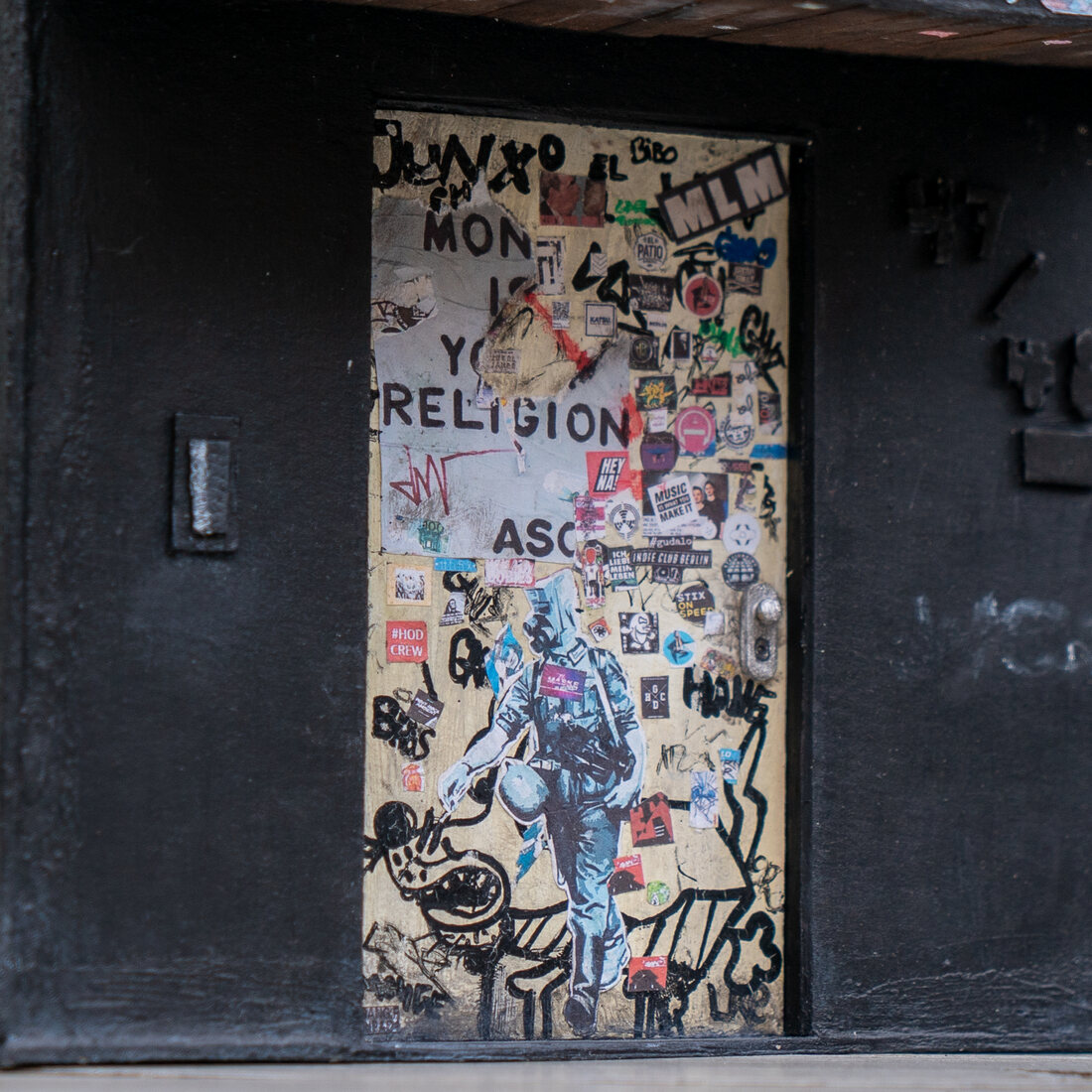
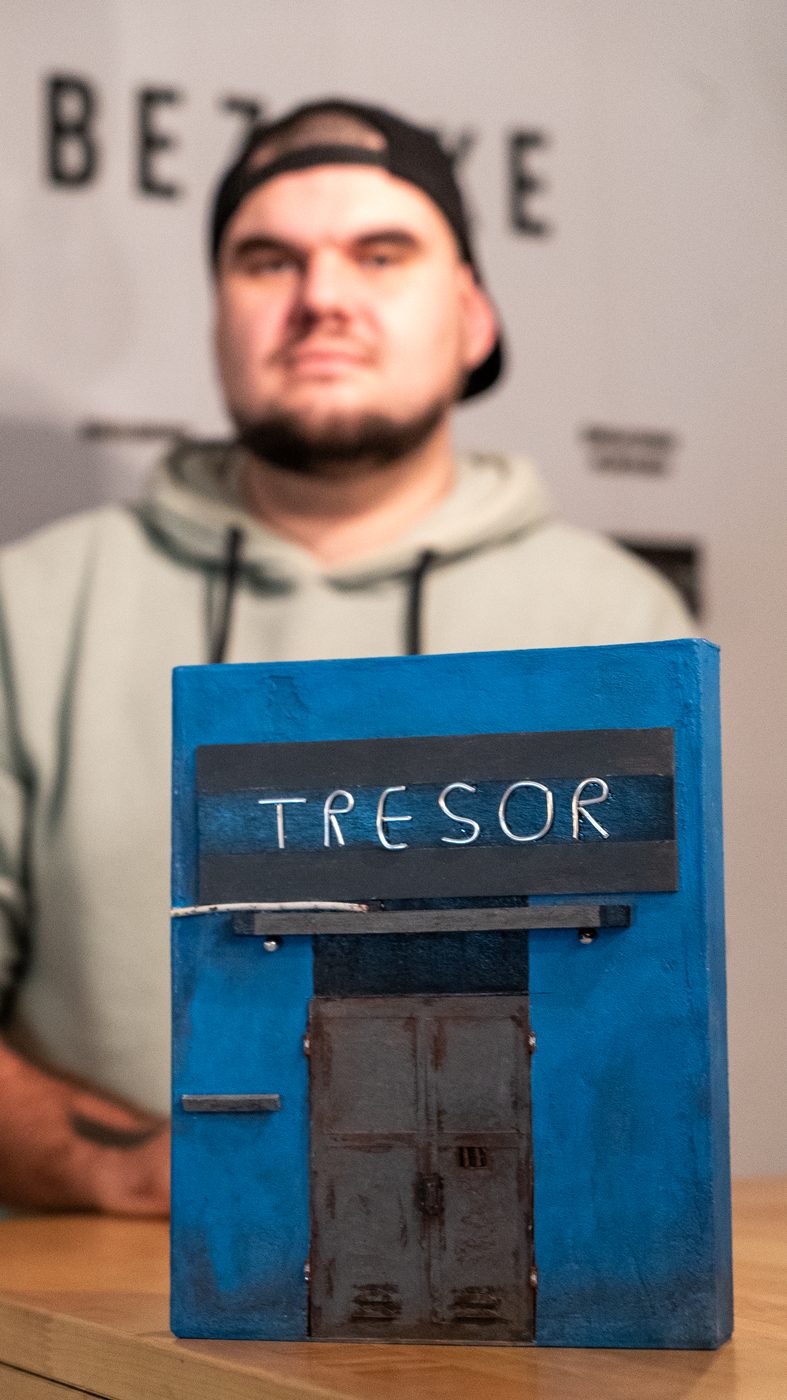
Bibo: I was out a lot in Berlin’s nightlife back then. I didn’t go to all of the clubs I show in my exhibition, but I knew most of the clubs from the inside. When Corona hit, I saw how club culture in Berlin was under threat and I wanted to do something to draw attention to it and to show respect to the whole culture.
Gregor: How do you create your models?
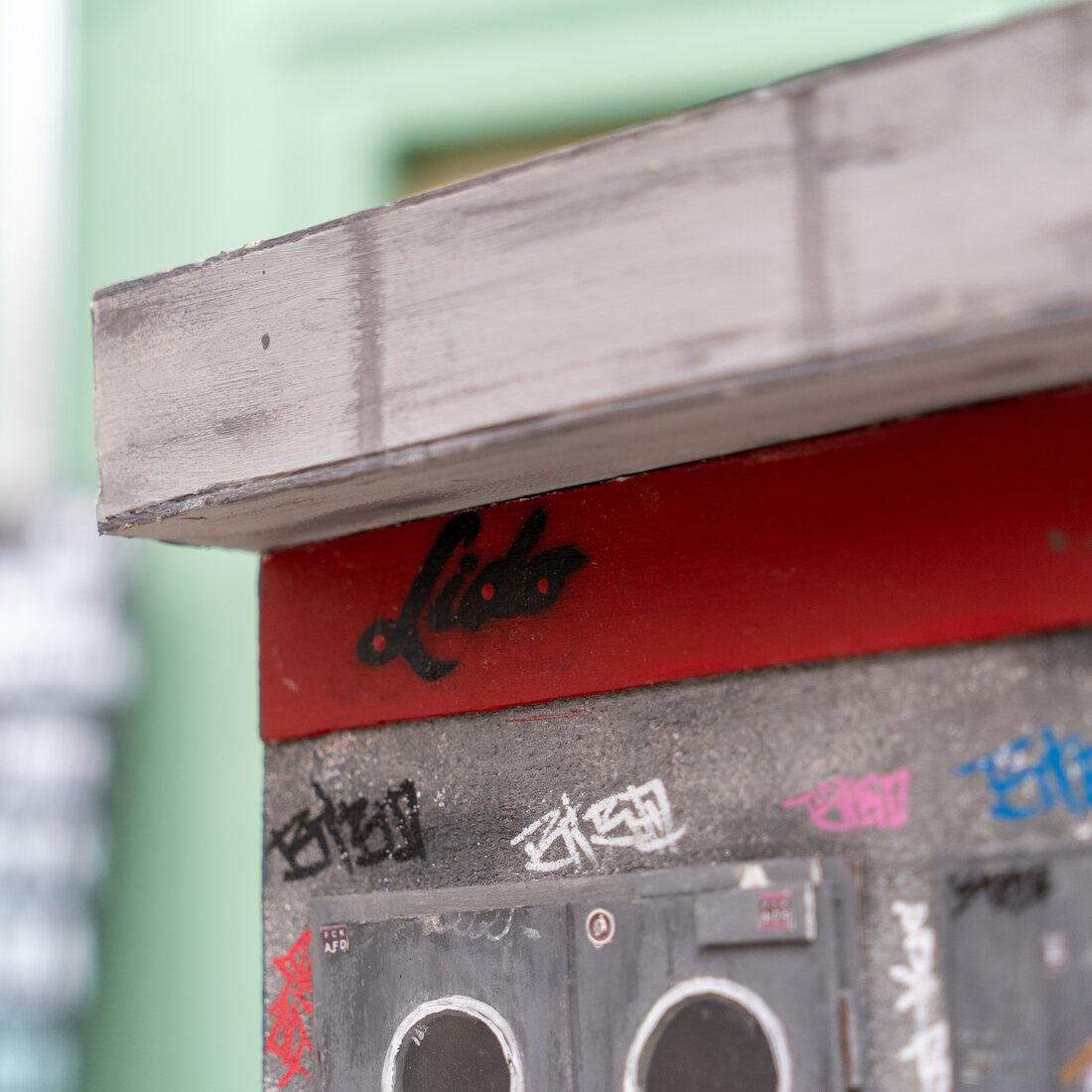
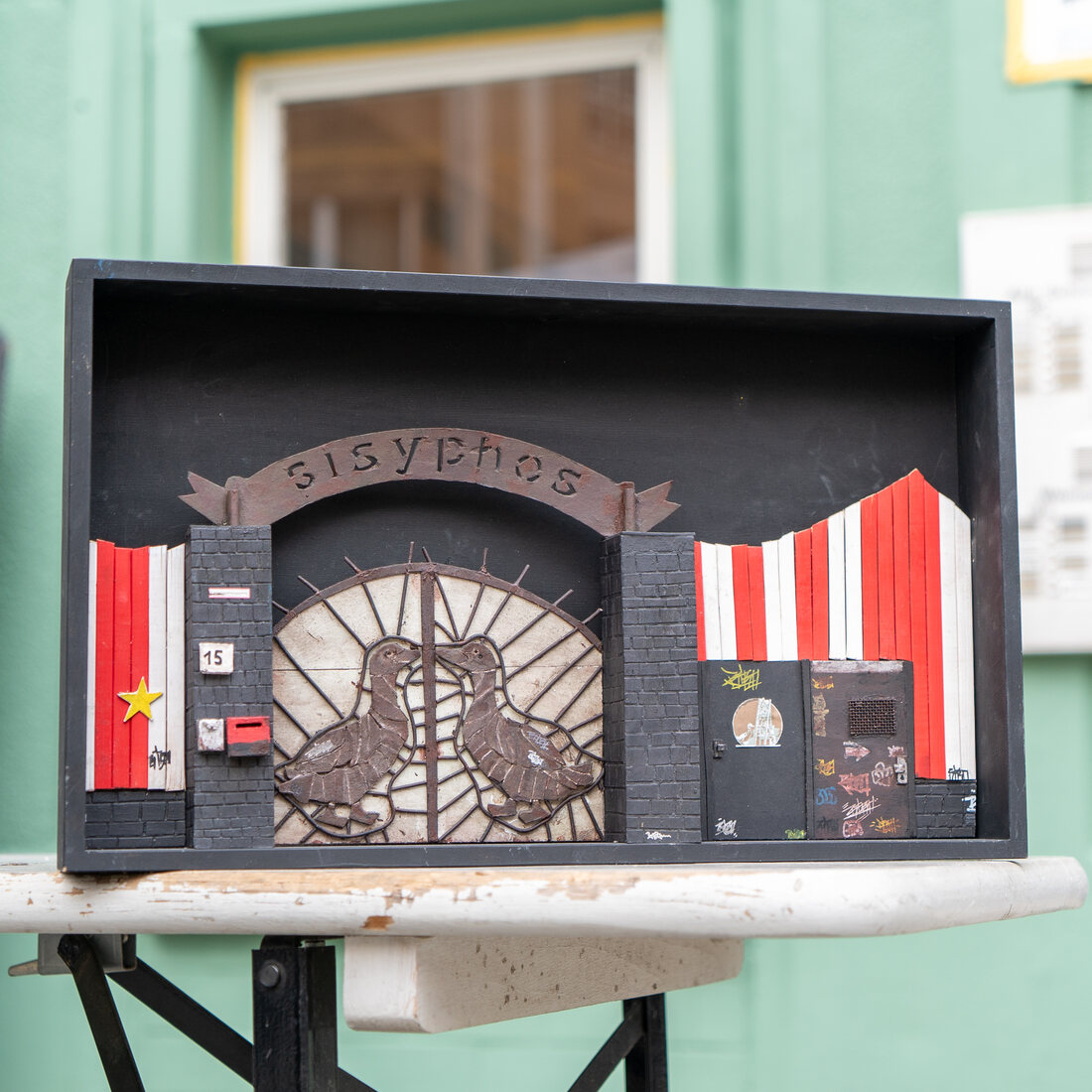
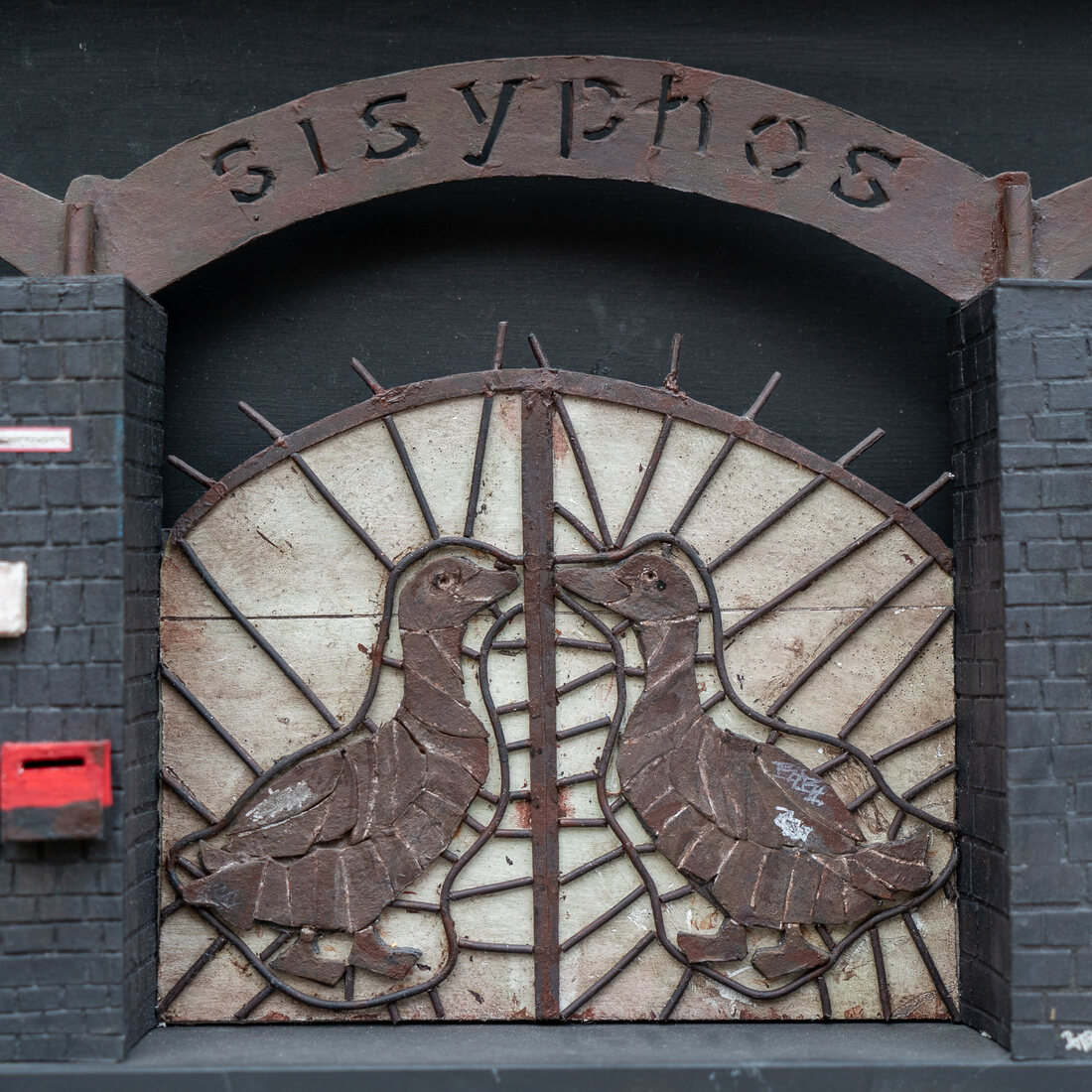
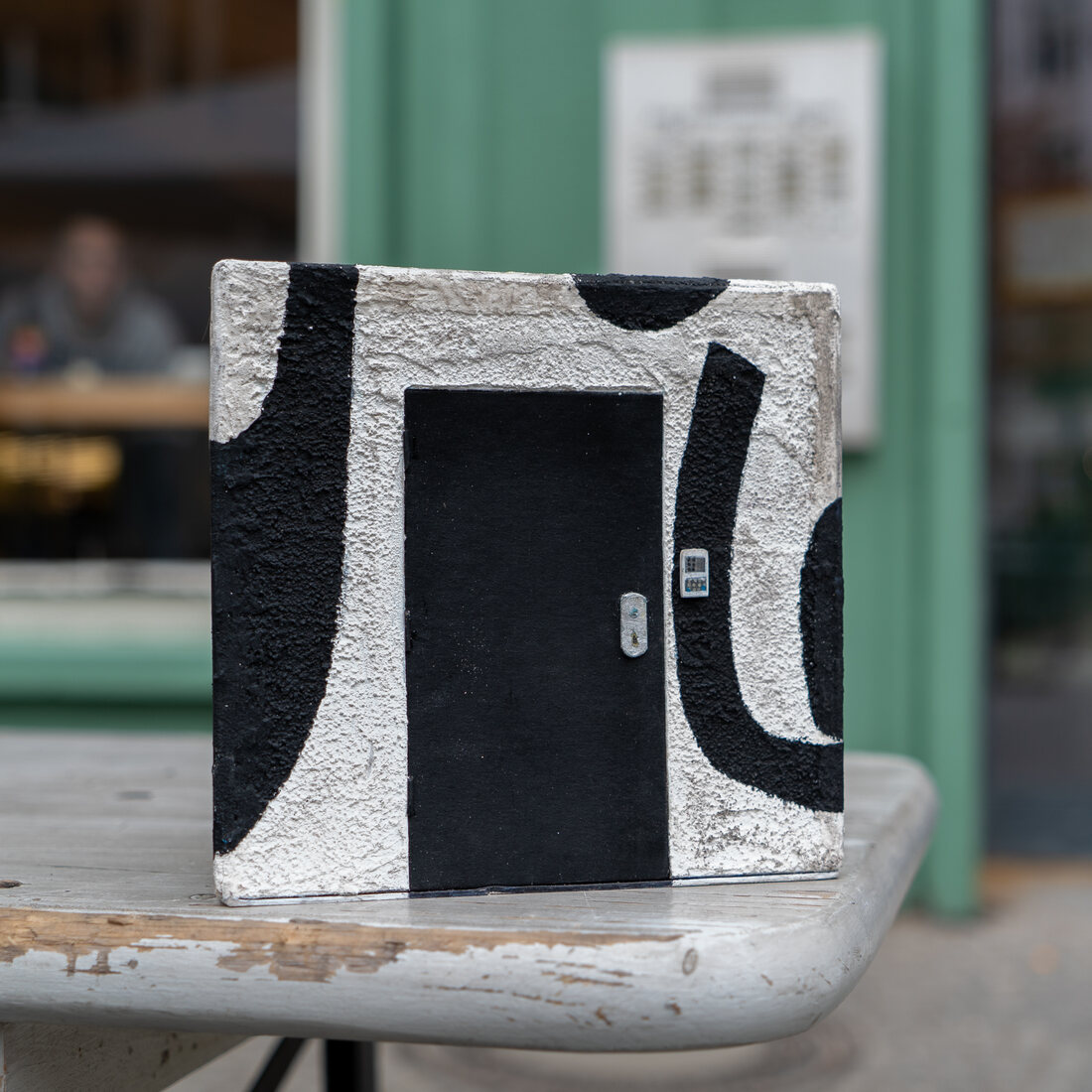
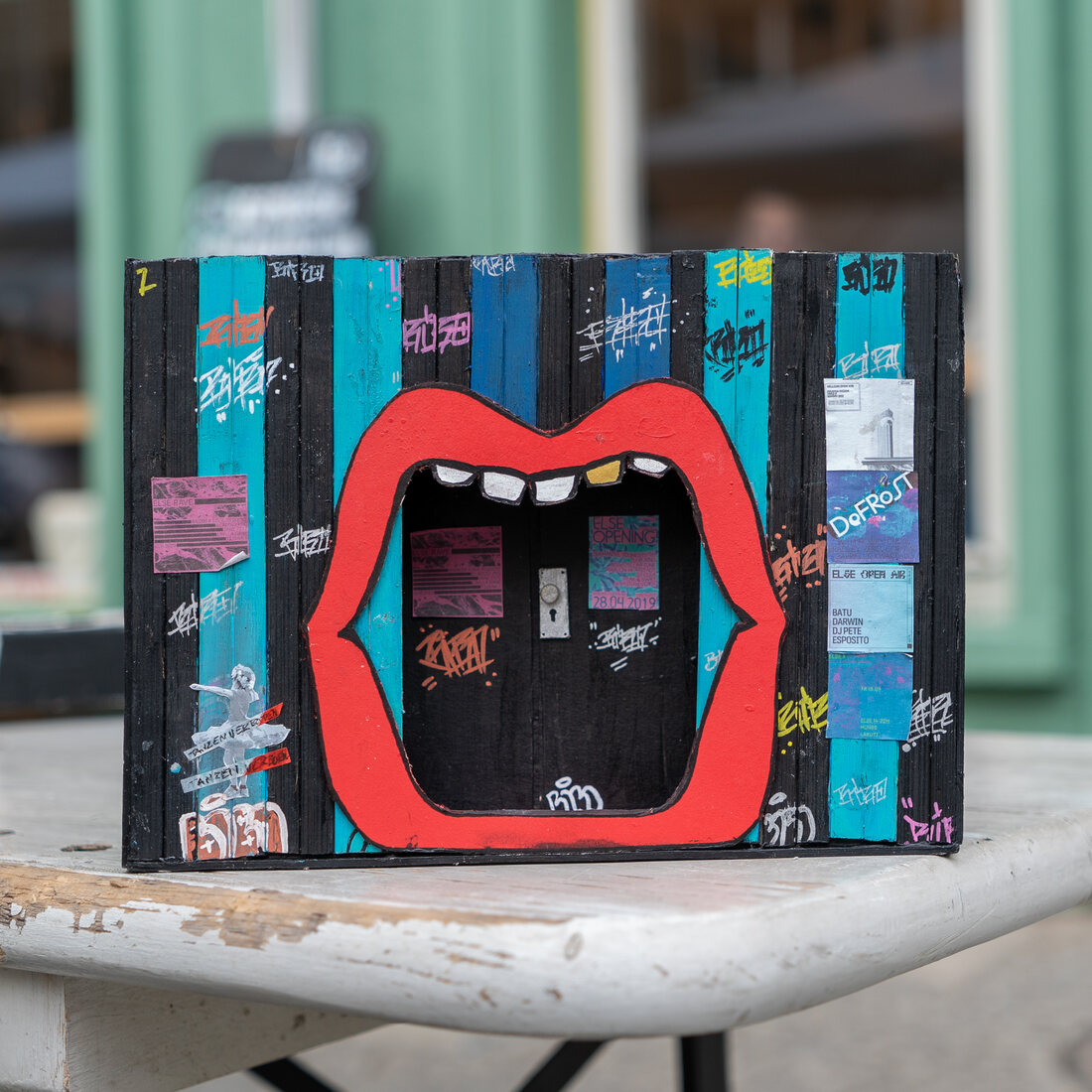
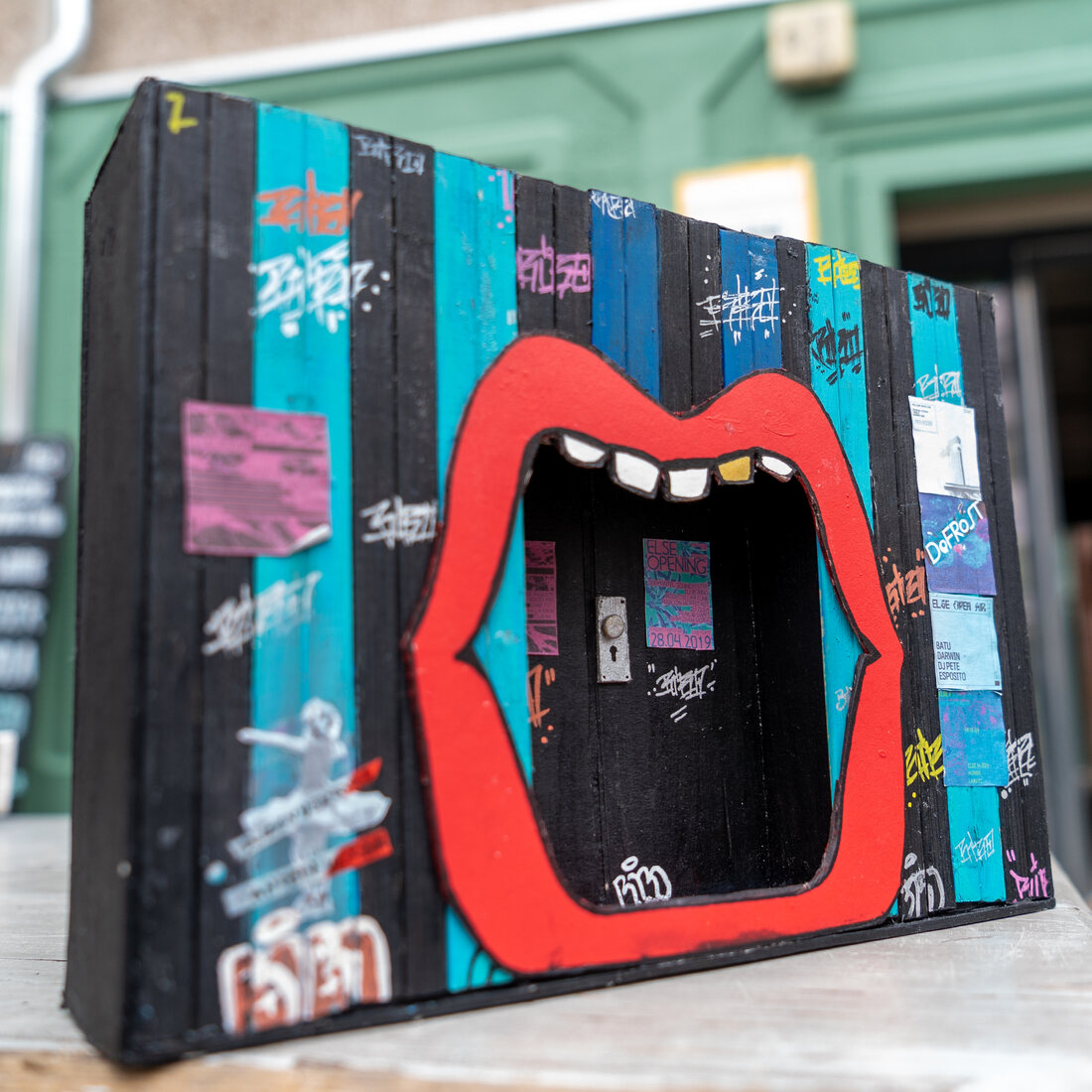
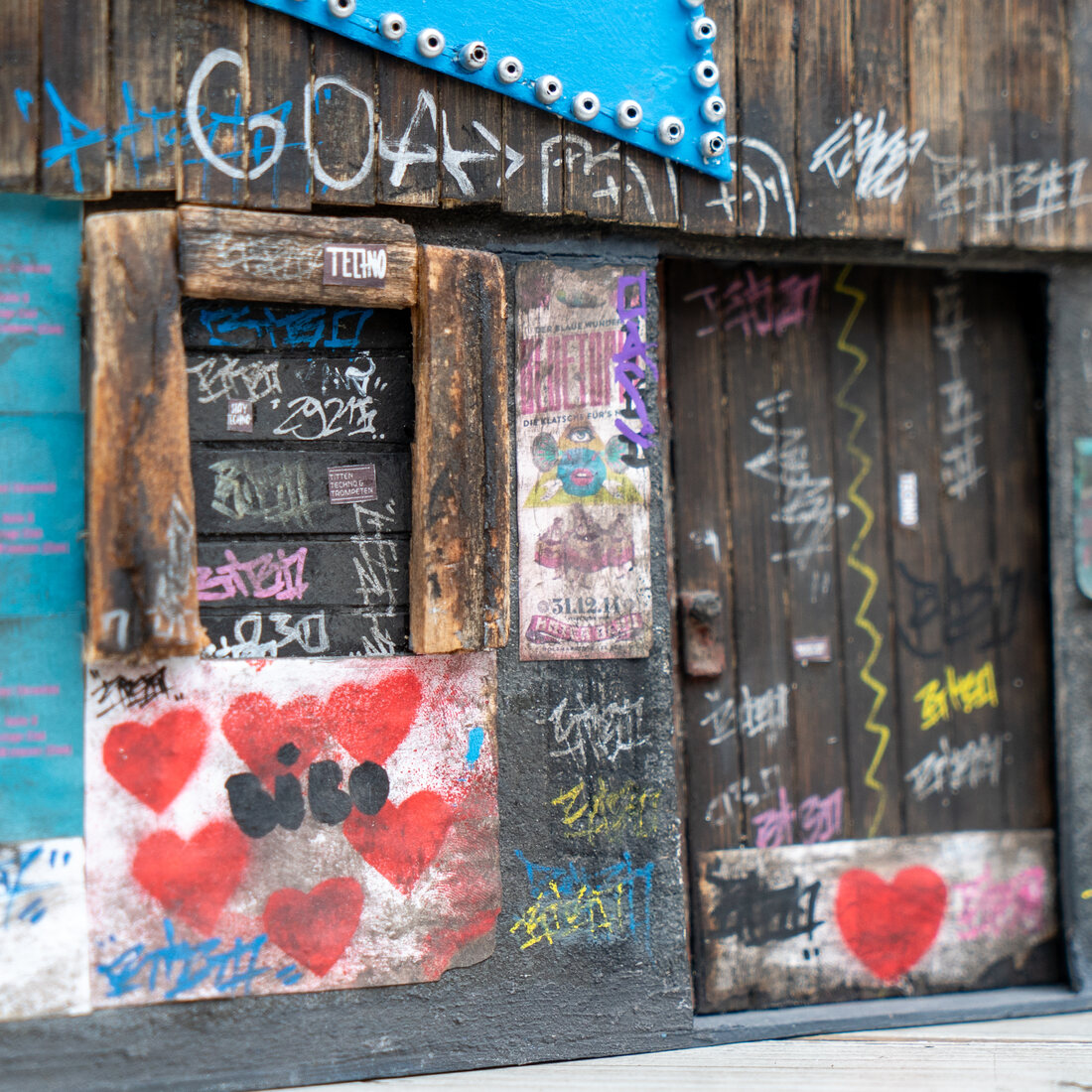
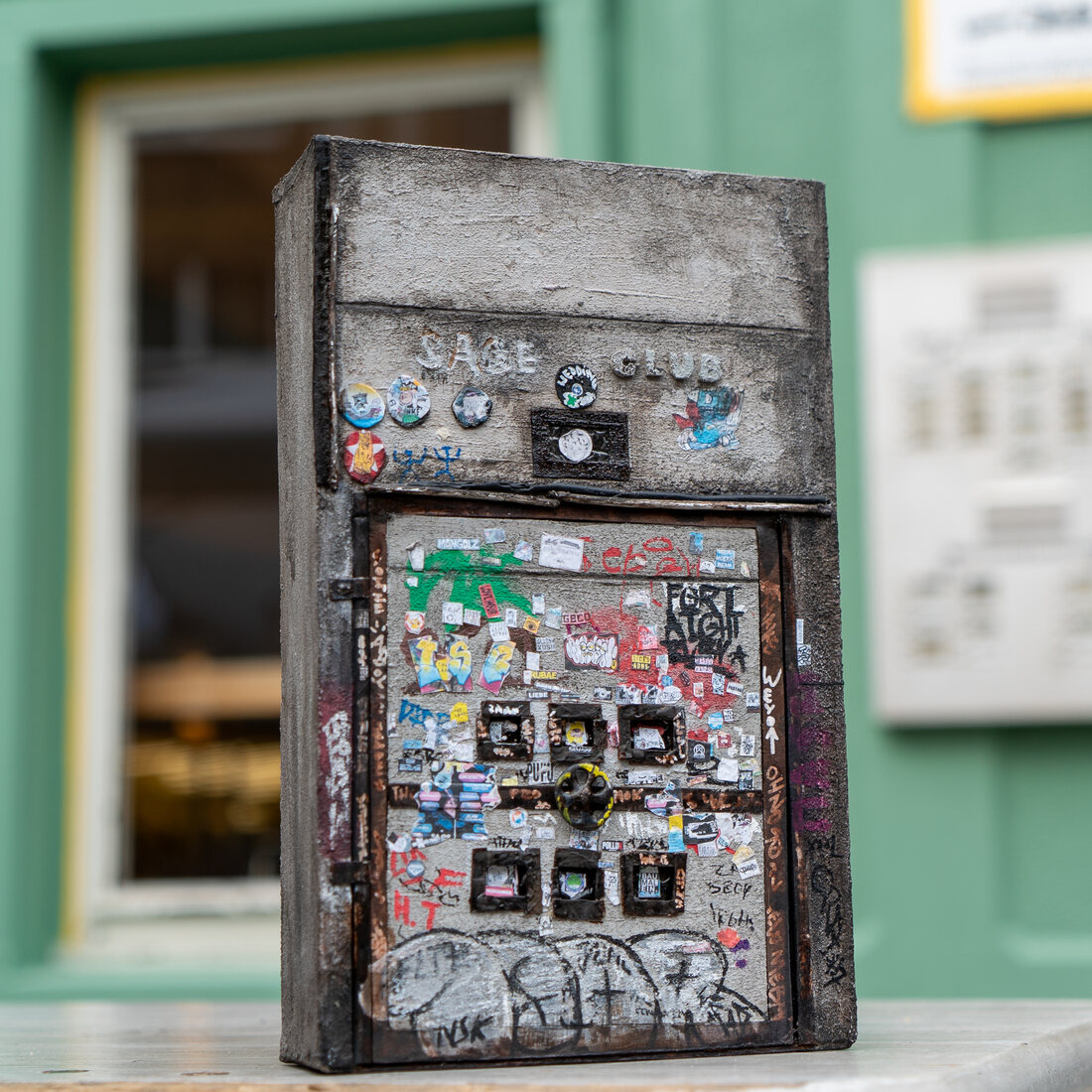
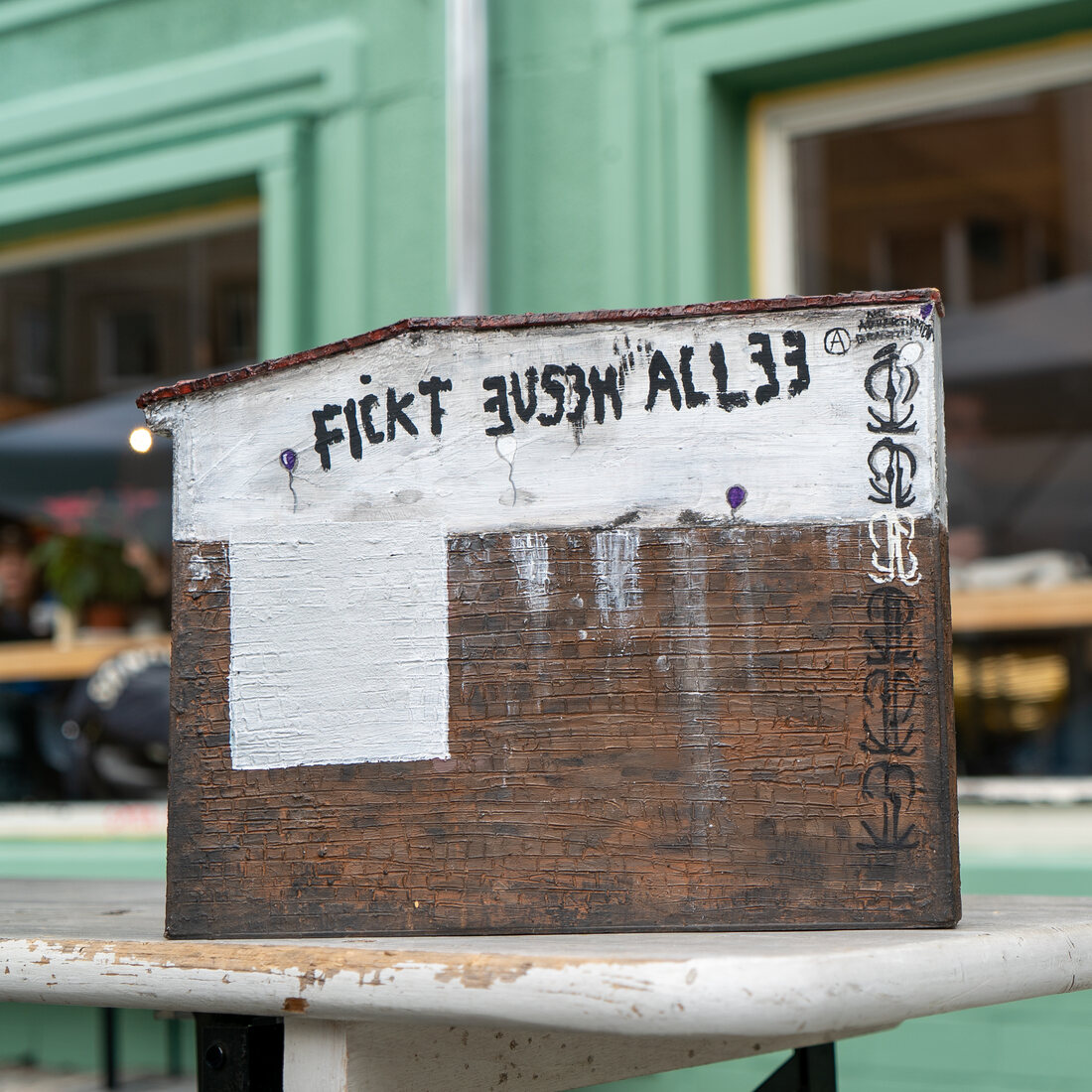
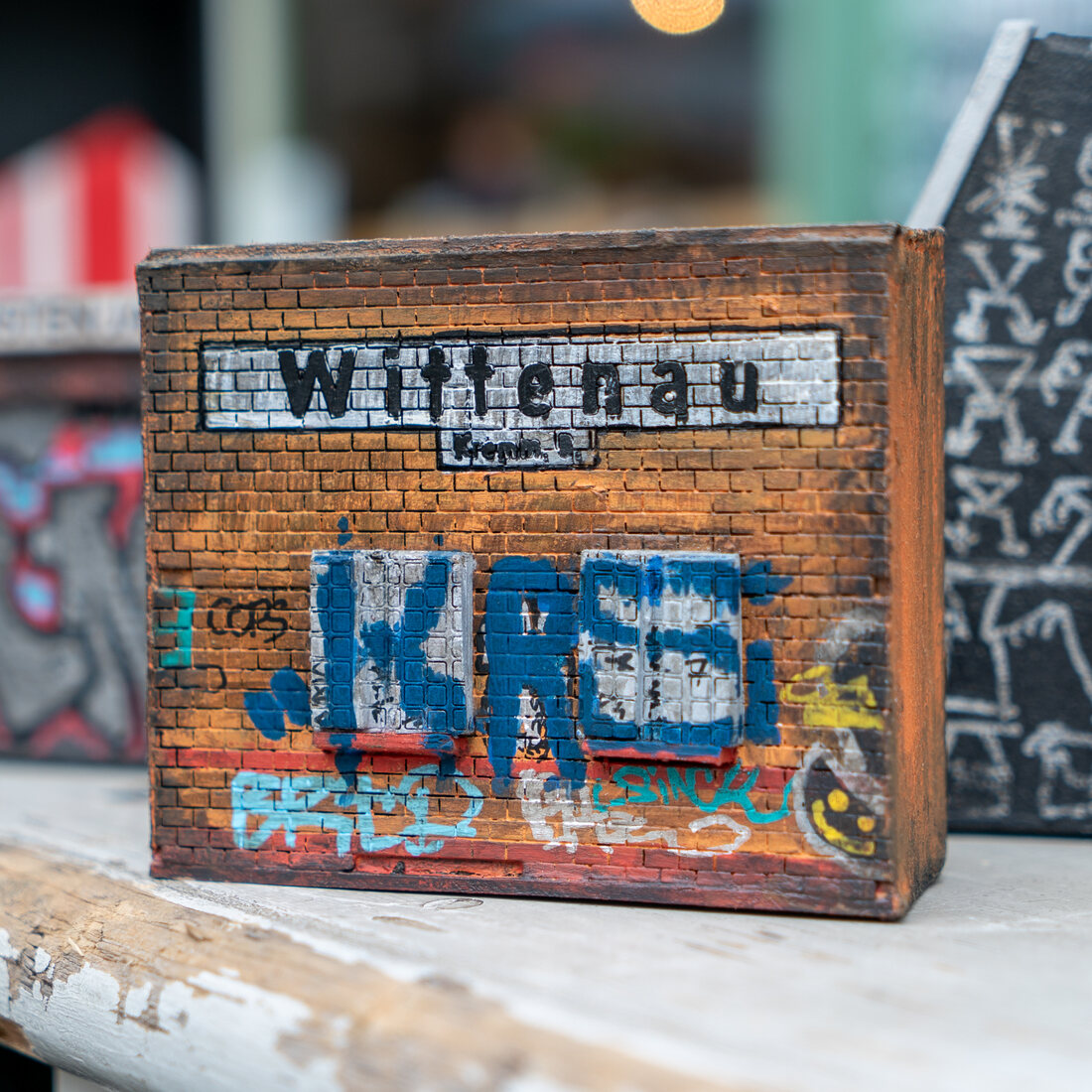
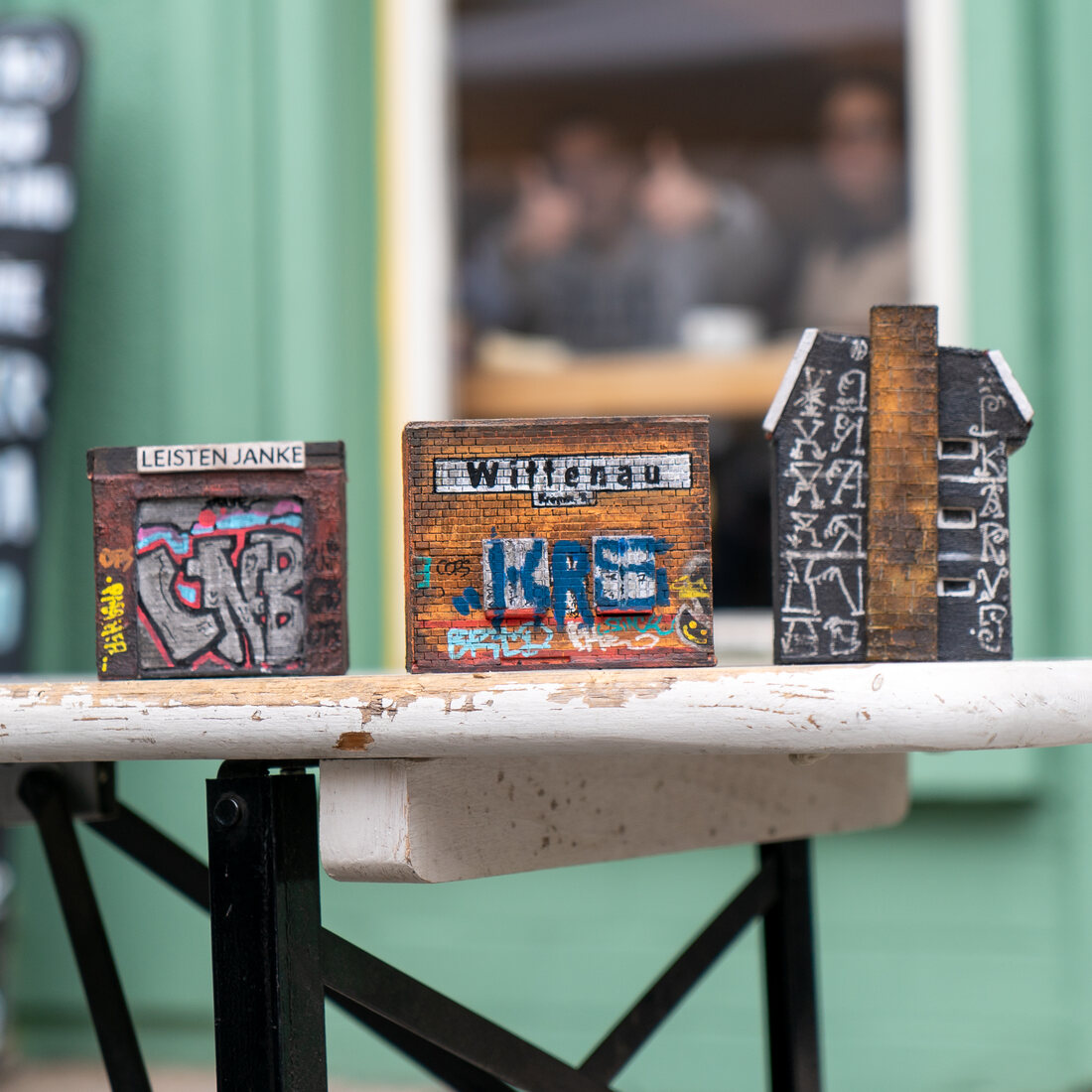
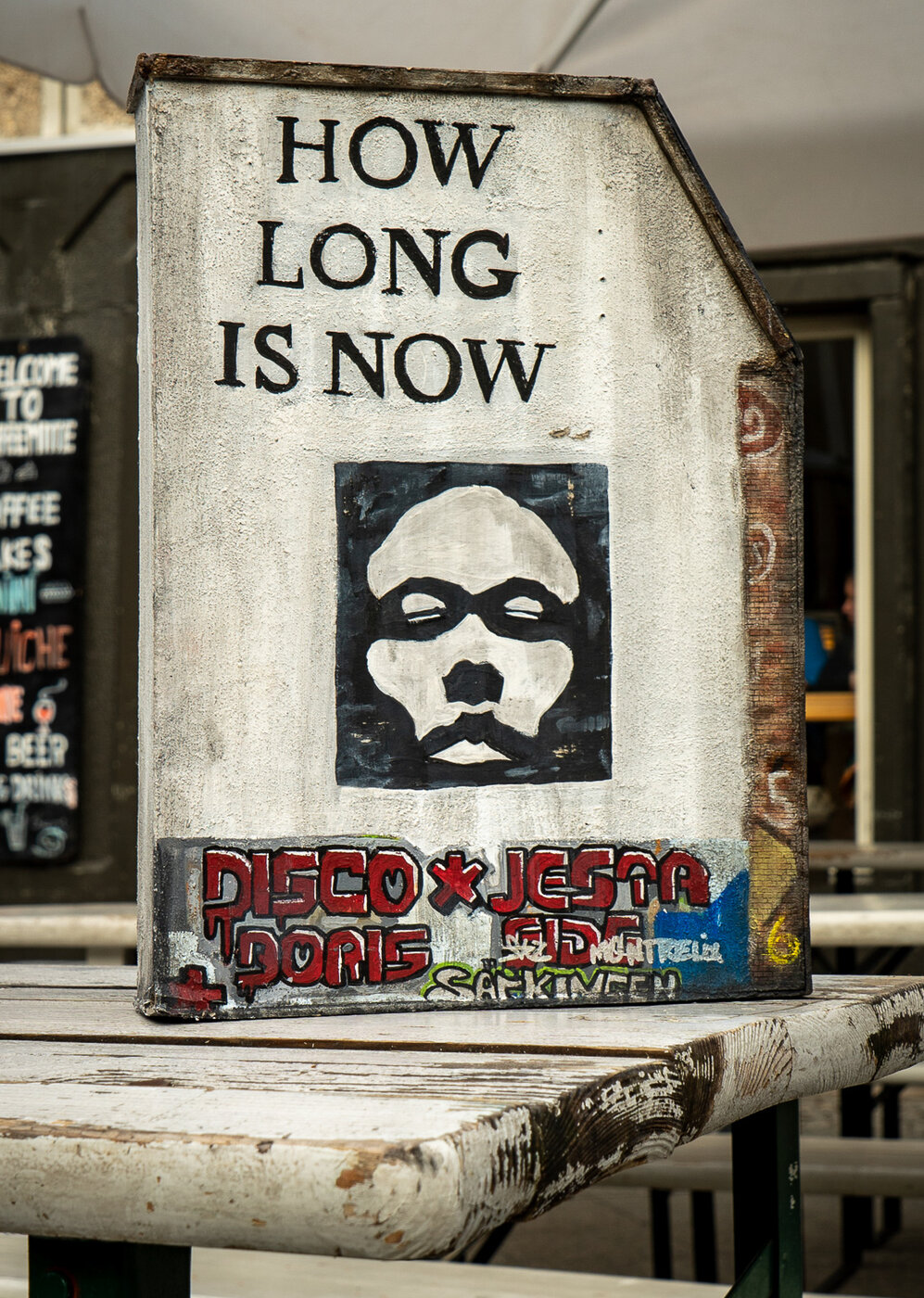
Bibo: I work quite freely, without precise measures or rules. I’m less interested in creating perfect, true-to-scale reproductions and more in capturing the atmosphere and feeling. I often improvise with materials that I have to hand. The rest is cardboard, acrylic paint, wood and bookbinding glue.
Gregor: What is it about working with miniatures that fascinates you?
Bibo: It’s about capturing memories. The miniatures allow me to preserve special places and scenes from Berlin’s culture. Memories of places that perhaps no longer exist or have changed a lot. It’s a somewhat nostalgic project.
Gregor: Besides the small club doors, you also make models of Berlin walls. How did that come about?
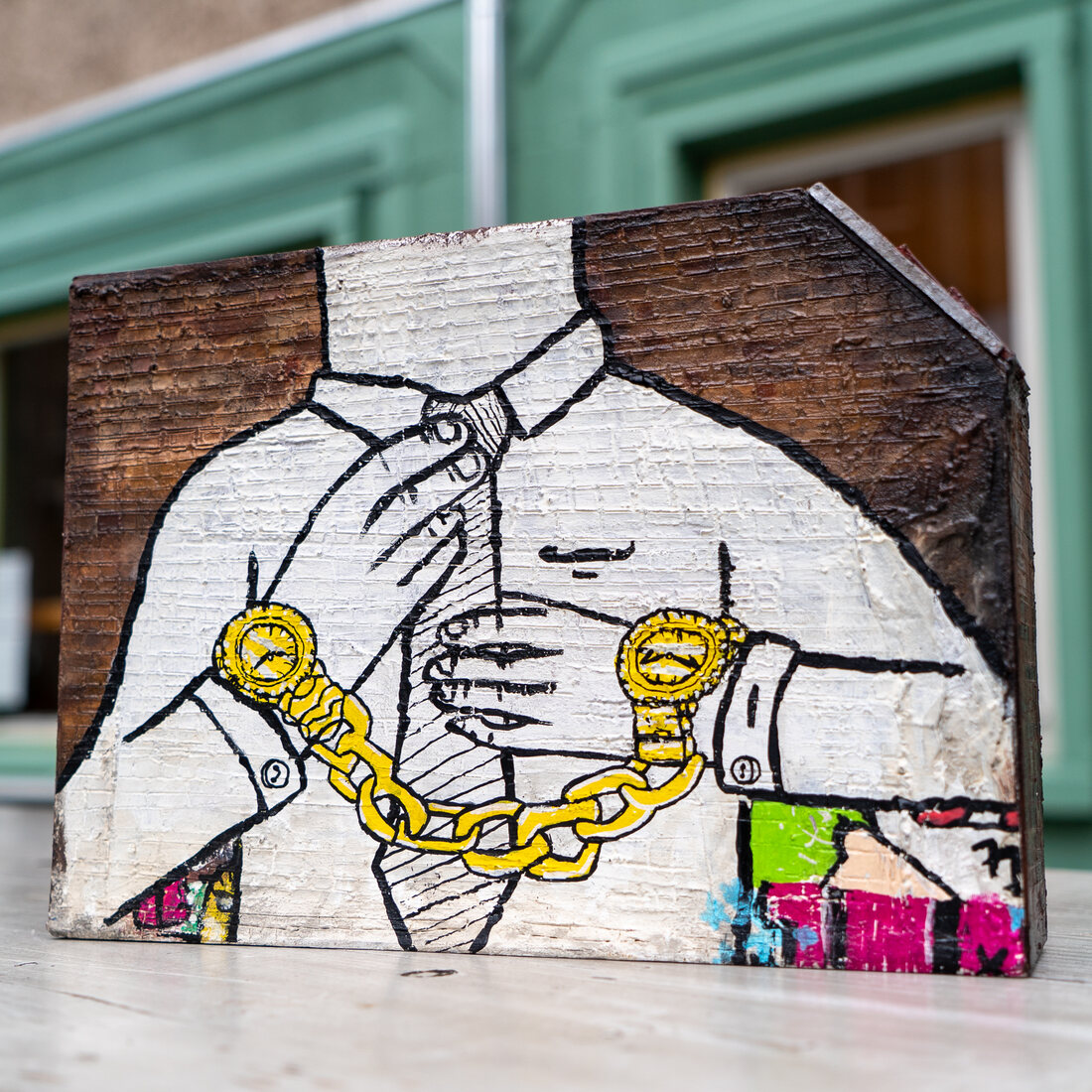
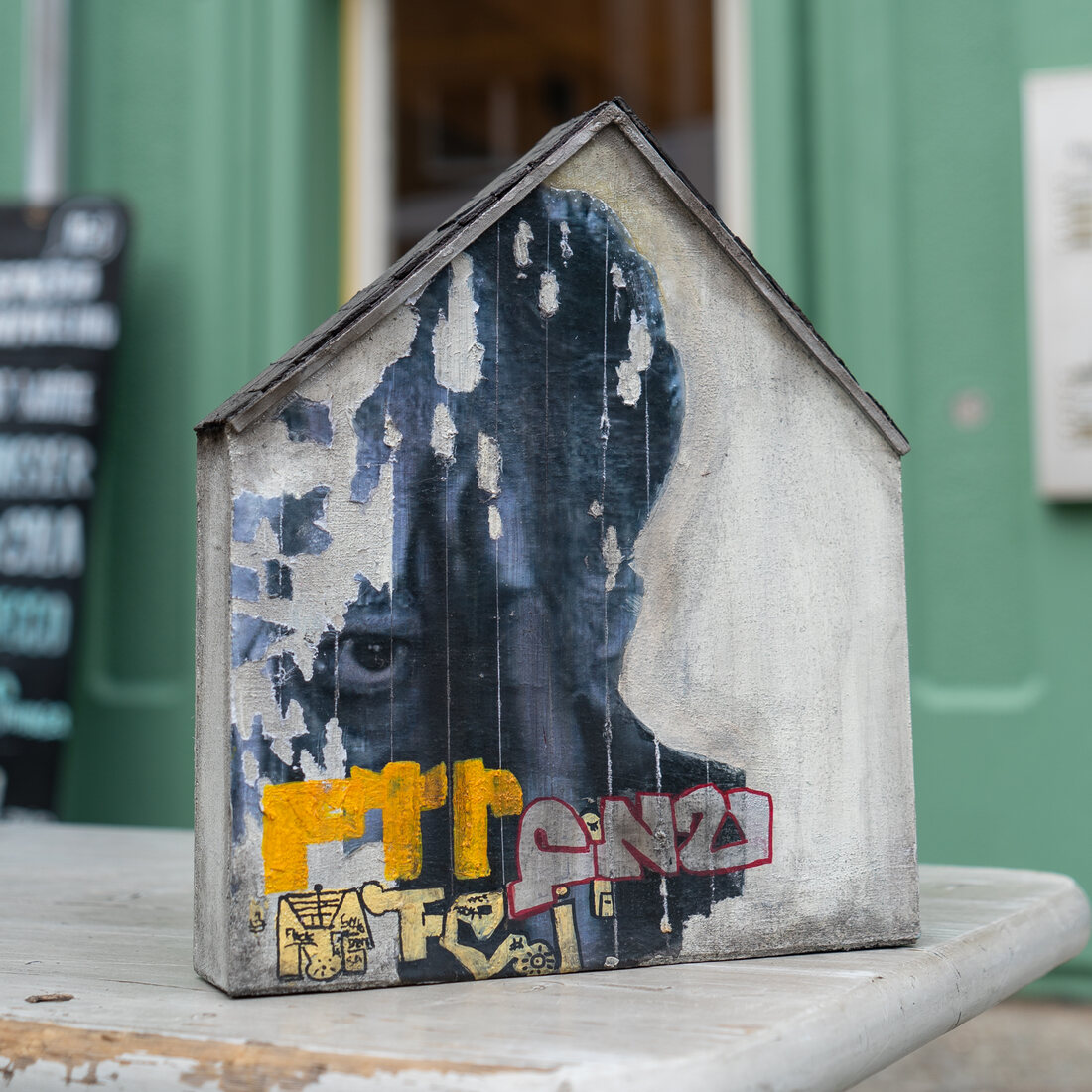
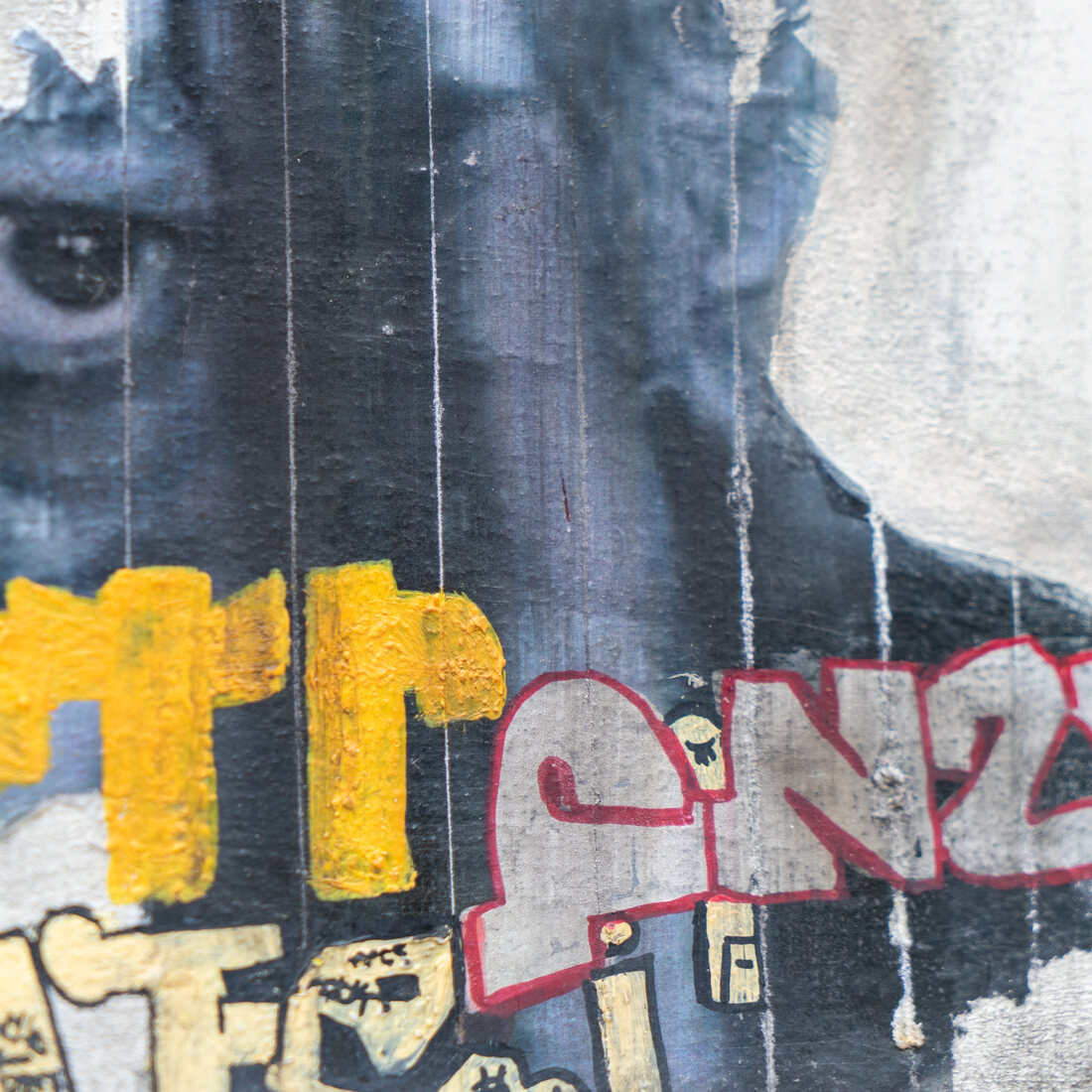
Bibo: Working on the topic of club culture made me realize that it’s not just the clubs that are under threat, but also the art on Berlin’s walls. All the graffiti, murals, stickers, tags and so on. For me, their destruction is also a destruction of the appeal of Berlin. My models are preserving the artworks that are shown on these walls. An example is Blu’s work on Schlesische Straße, where he painted over his iconic image to protest against the sell-out of the city. My model shows the wall and his art work before gentrification destroyed it.
„After witnessing the changes happening in the surrounding area during the last years, we felt it was time to erase both walls. This act represented not just a reaction to the destruction of the adjacent squatter camp, but also a broader protest against the commercialization of the area, which we believed was killing the spirit of the neighbourhood.“ — Blu